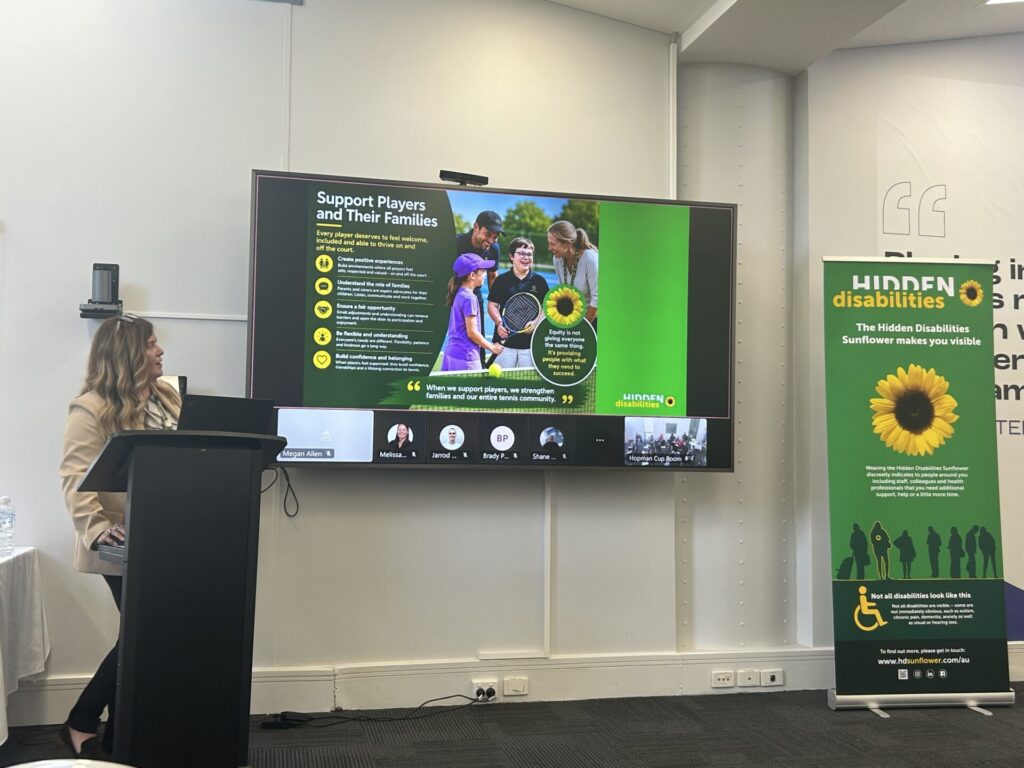
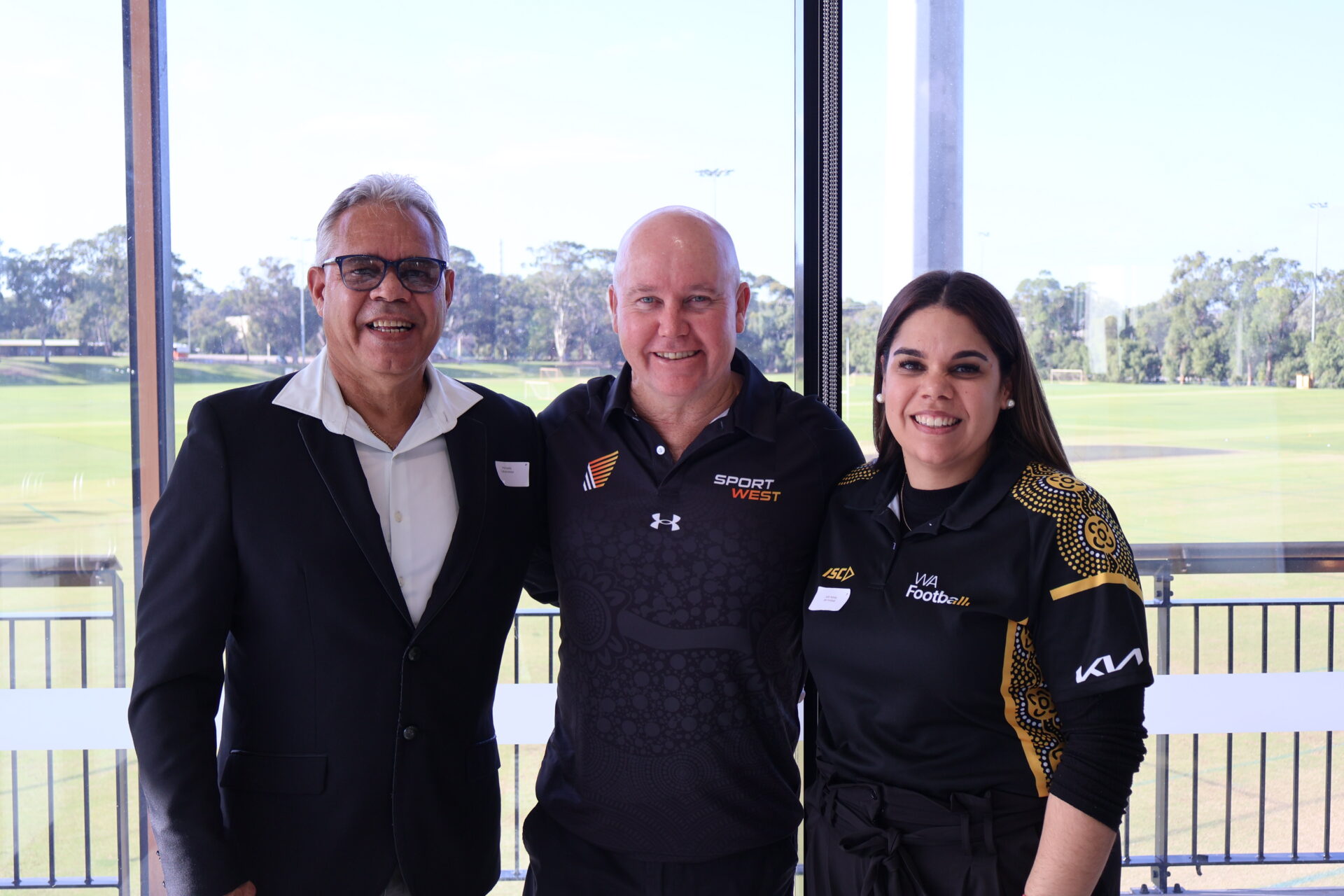
The tennis community came together at the State Tennis Centre on Tuesday 9 June 2026 for the Hidden Disabilities Forum, an important event focused on building more inclusive and welcoming environments across the sport.
Hosted by Tennis West, the forum featured presentations and discussions from Reach ADHD, the Hidden Disabilities Sunflower Initiative, and Tennis Australia, with attendees gaining practical insights into how clubs, volunteers, coaches, officials, and sporting organisations could better support people living with hidden disabilities.
Reach ADHD shared information on ADHD and neurodiversity, highlighting the importance of understanding executive functioning challenges and creating supportive environments where individuals could thrive through empathy, communication, and practical support strategies. The Hidden Disabilities Sunflower Initiative discussed the significance of recognising non-visible disabilities and how the globally recognised sunflower symbol helped individuals discreetly indicate they may require additional support, understanding, or patience in community and sporting settings.
Open to all involved in tennis, the event provided an opportunity for participants to strengthen their understanding of inclusion, increase awareness, and explore practical ways to support positive experiences for everyone involved in the game. Attendees also enjoyed a light lunch and refreshments while connecting with others committed to inclusive community sport.
Key stakeholders from across the WA sporting sector also attended the forum, demonstrating a shared commitment to fostering more inclusive and supportive sporting environments throughout the state.
True Sport Manager, Jasmine Cappellucci attended the forum, highlighting the strong alignment between the principles of True Sport and the ongoing work being undertaken to create positive sporting environments where all participants felt safe, respected, valued, and included.
“It's fantastic to see Tennis West being so proactive in this space and taking meaningful steps to educate the sporting community on how to create welcoming and inclusive environments for everyone. Initiatives like this play an important role in ensuring all participants feel supported, understood, and able to fully enjoy their sporting experience, aligned with the True Sport ethos.”
Hidden disabilities can include neurological, cognitive, sensory, mental health, or chronic health conditions that may not be immediately visible to others. The forum reinforced how small changes in communication, awareness, and support could make a significant difference to the experiences of players, families, volunteers, and spectators.
True Sport continued to advocate for inclusive and participant-centred sporting cultures, recognising that positive environments helped individuals thrive both on and off the court. By supporting initiatives such as the Hidden Disabilities Forum, the sporting sector demonstrated its shared commitment to removing barriers to participation and ensuring sport remained accessible and enjoyable for all.
The event reflected the growing commitment across Australian sport to foster environments built on empathy, respect, inclusion, and integrity - values that sit at the heart of both community tennis and the broader True Sport movement.